Markets and investing
The Rise of Experiential Real Estate: Why Investors Are Betting on Lifestyle-Driven Properties
 Rosario Diaz Ausa
14 May 2025 · 4 min read
The real estate industry is undergoing a seismic shift. No longer is it enough to offer square footage, four walls, and a prime location. Today, experience is the new anchor tenant. From branded residences with concierge-level services to mixed-use ecosystems built around wellness, community, and sensory engagement, a new paradigm has emerged: experiential real estate.
Driven by consumer demand for meaning, connection, and lifestyle integration, experiential real estate is redefining value, for residents, visitors, and investors alike. As traditional returns come under pressure in the face of macroeconomic volatility, investors are doubling down on properties that offer not just utility, but emotional resonance and immersive appeal.
What Is Experiential Real Estate?
Experiential real estate refers to residential, commercial, hospitality, and retail properties designed around curated experiences rather than static function. These assets create environments that encourage interaction, discovery, and brand engagement, often blending physical design with services, programming, and sensory elements.
This can include:
- Wellness-integrated residences with infrared saunas and IV therapy lounges
- Retail spaces that double as event venues or immersive brand environments
- Hospitality concepts built around lifestyle, art, or community identity
- Real estate projects designed to spark social media virality and in-person engagement
As McKinsey’s Colleen Baum puts it, “It’s a reason to go.” Experiential projects aim to become destinations in and of themselves, not just real estate, but places people seek out, dwell in, and talk about.what-the-real-estate-in…
The Market Is Responding, With Billions
According to the Global Wellness Institute, wellness real estate alone reached $438 billion in value in 2023, with forecasts projecting it will surpass $900 billion by 2028, growing at 15% CAGR. At the same time, branded residences, often infused with lifestyle experiences, have grown by over 160% globally since 2015, and are expected to approach 200,000 units worldwide by 2027.
In the retail sector, McKinsey data shows that experiential retail increases omnichannel sales by 15 to 25%, and in some cases by over 200% in the catchment area. Despite high upfront buildout costs, these stores act as acquisition engines and brand amplifiers.what-the-real-estate-in…
Case Study: Dubai as the Epicenter of Experiential Development
Dubai has rapidly positioned itself as a global laboratory for experiential real estate. The city’s alignment between government vision, developer ambition, and consumer expectations makes it one of the world’s most fertile grounds for innovation in lifestyle-driven property.
Notable projects include:
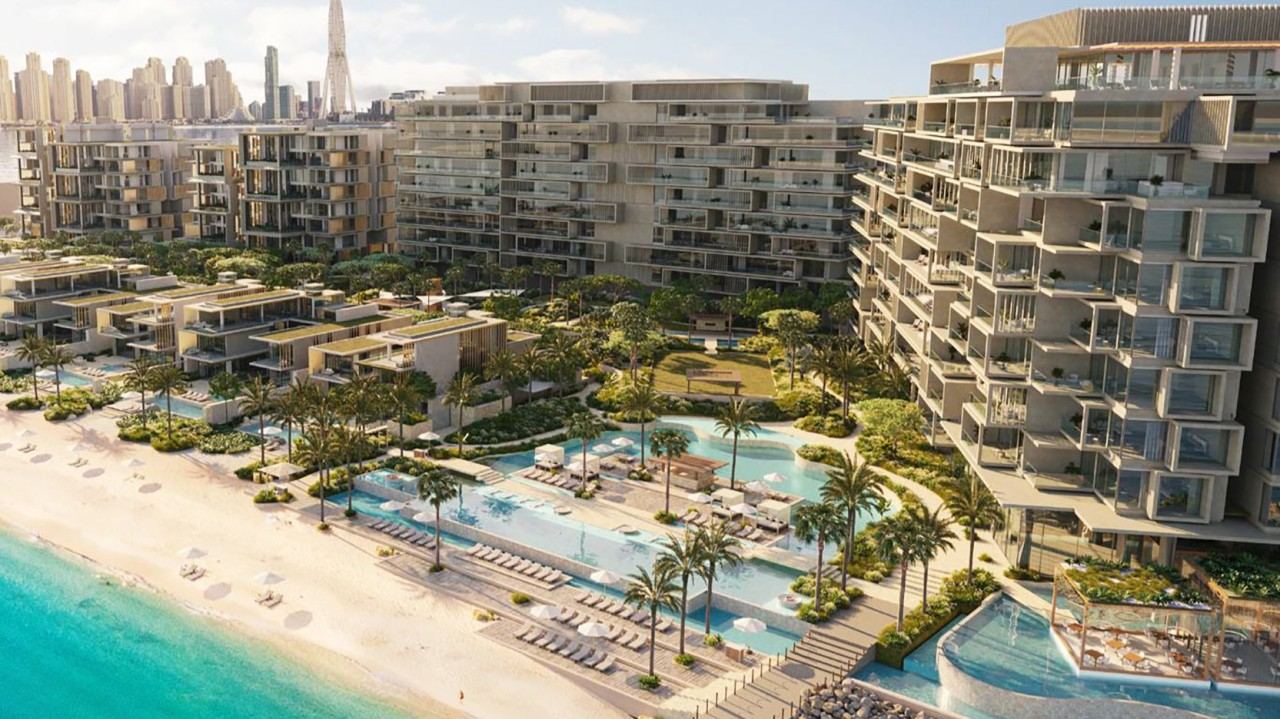
- Six Senses Residences The Palm: Combining beachfront luxury with holistic wellness, these branded homes include access to cryotherapy, biohacking treatments, and curated lifestyle programming.
- Bugatti Residences by Binghatti: Inspired by French Riviera living, this tower offers private car lifts into your penthouse, private spas, and “sky mansion” units, marketed as a hyper-luxury experience with automotive DNA.
- Tiger Sky Tower: A $1B+ experiential skyscraper in planning that will include the world’s highest infinity pool, a residential rainforest, and immersive lifestyle zones for residents and visitors alike.
- DAMAC Lagoons: A large-scale community themed around global coastal cities, featuring a wave pool, outdoor cinema, floating amphitheaters, and experiential “districts” such as Morocco, Santorini, and Ibiza.
Dubai’s success is not just aesthetic. In 2024, villa prices rose by 31.6% and apartment values by 23.6%, driven in part by demand for lifestyle-focused, turnkey communities.
Experiential Real Estate Beyond Dubai
Globally, the trend is expanding:
- The Well Bay Harbor (Miami): A wellness-branded residence offering infrared saunas, organic markets, hydrotherapy pools, and access to functional medicine providers, wrapped in a branded ecosystem.
- Magic Leap Campus (Fort Lauderdale): A mixed-use campus incorporating tech innovation, art installations, and immersive retail experiences, designed as a placemaking play.
- AlUla (Saudi Arabia): Though in its early phases, this mega project is combining cultural heritage, hospitality, and desert adventure to create a lifestyle experience built entirely around emotional resonance and narrative.
- Area15 (Las Vegas): A fully immersive experiential retail and entertainment district where tenants range from Meow Wolf to VR arcades and kinetic sculpture galleries, proving the model in commercial entertainment real estate.
Why Investors Are Paying Attention
- Premiums & Performance Experiential assets often command 20 to 40% higher sales prices or rental rates due to their uniqueness and amenity depth.
- Resilience Experiential properties attract loyal user bases and community engagement, leading to longer dwell times and more diversified income streams.
- Cross-Channel Lift In retail, physical experience translates to higher digital conversion rates. McKinsey found that online sales drop in areas when a store closes, validating the idea that experiential physical spaces drive total brand value.what-the-real-estate-in…
- Brand Extension & Stickiness Investors are finding that experiential real estate reinforces tenant brands and gives landlords leverage to build curated, synergistic tenant mixes that enhance the whole asset.
Designing for Experience: What Developers Must Consider
Creating an experiential property is not just about adding amenities. It requires:
- Placemaking strategy: Including events, design curation, programming, and local integration
- Data-driven tenant mix: Using psychographics, mobility, and purchasing data to cluster synergistic uses
- Flexible leases: Including revenue-share models, hybrid tenancy structures, and co-branding terms
- CapEx planning: Buildouts are typically more capital intensive and require longer break-even timelines (3 to 5 years is common)
Challenges and Risks
Despite its upside, experiential real estate is not without complexity:
- High initial costs: Experiential buildouts require greater TI allowances and ongoing activation budgets
- Execution risk: Poor experience execution can lead to underperformance and tenant churn
- Market volatility: Economic downturns can shift discretionary consumer behavior away from lifestyle luxuries, making durability of concept crucial
Smart investors evaluate both the experience and its operational infrastructure before underwriting.
Conclusion: Real Estate’s Next Frontier Is Emotional
The rise of experiential real estate reflects a deeper truth: value in real estate is no longer just physical, it’s emotional, social, and functional.
For investors looking to future-proof portfolios, lifestyle-driven properties offer a compelling blend of cultural relevance and asset performance. Whether it’s wellness, design, hospitality, or brand storytelling, the projects of tomorrow will need to do more than house, they’ll need to inspire.
First published on LinkedIn.