Markets and investing
The Permission Slip: Why Tax Was Never the Real Thesis
 Rosario Diaz Ausa
5 May 2026 · 7 min read
The prediction was right. But the reason was more interesting than anyone admitted.
In 2007, a research team at Knight Frank made a prediction that would prove to be one of the more accurate calls in global real estate analysis. Tax, they argued, would become the single most important feature shaping the future location of primary residences. Demand for homes in tax-friendly jurisdictions would grow exponentially. Those markets would outperform over time.
Nineteen years later, the data supports them. Monaco prime values up 230% since 2007. Zurich up 116%. Geneva up 103%. London, despite every advantage of culture, language, and institutional depth, up a comparatively modest 26%.
The prediction held.
But sitting in Abu Dhabi in 2026, watching capital move at the level where decisions are actually made, I think the prediction was right for reasons that were only partially understood at the time. And the gap between the stated thesis and the real one is where the most interesting part of this story lives.
Tax was the permission slip, not the destination
When a UHNWI family decides to restructure their life across jurisdictions, tax is almost always the conversation that opens the door. It is quantifiable. It is presentable to a board, a spouse, a family office committee. It gives permission to a decision that was already forming for other reasons.
But tax alone has never built a destination. It has only ever made one possible.
The clearest evidence of this is in the markets that tried to compete on tax alone. There are jurisdictions around the world with zero income tax, minimal capital gains exposure, and complete territorial exemptions. Most of them are not receiving meaningful flows of serious UHNWI capital. Because the other side of the ledger, governance, infrastructure, education, safety, lifestyle, legal clarity, was never built to match the fiscal offer.
The UAE understood something that most low-tax jurisdictions did not. Tax is not a product. It is a price point. And price points without product do not sustain demand. They attract arbitrage.
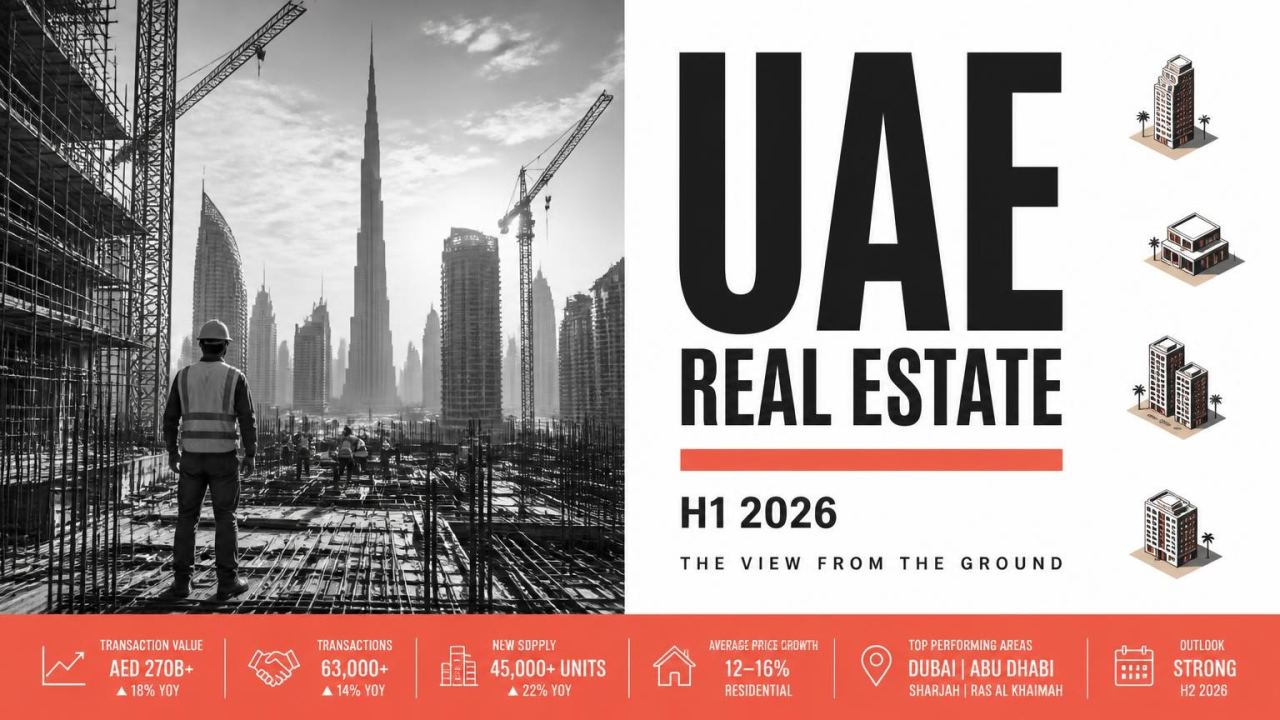
What the UAE built from the mid-2010s onward was not a tax haven. It built a city, and then another one, that happened to have no income tax. The distinction sounds semantic. In practice, it is everything.
The market the 2007 prediction missed
When Knight Frank made their call, the UAE was not part of the primary conversation. Monaco, Switzerland, Jersey, the Channel Islands; these were the jurisdictions expected to capture the flows that tax pressure in the UK, France, and eventually the US would generate.
And they did capture flows. The Monaco and Zurich numbers are real.
But the most complete expression of the tax-driven mobility thesis, the one that validated it most fully and at the greatest scale, happened somewhere the original analysis did not fully anticipate. It happened here.
The UAE received +9,800 net HNWI inflows in 2025 alone, carrying an estimated $63 billion in wealth. The US was second at +7,500. Italy third at +3,600. Dubai recorded a 102% increase in high-net-worth residents between 2014 and 2024.
These are not the numbers of a tax haven. They are the numbers of a destination economy that used tax as its entry point and built everything else around it.
The private schools. The cultural institutions. The masterplanned communities. The residency architecture that converts a visit into a lease and a lease into a Golden Visa and a Golden Visa into a generational decision. The deliberate construction of a lifestyle that does not require significant wealth just to be comfortable, but rewards it when it arrives.
Tax opened the door. The rest of the city made people stay.
What the 2026 moment is actually testing
The geopolitical situation of early 2026 has introduced a new variable into this analysis. The Iran conflict. Airspace disruptions. The Strait of Hormuz. And the data point that Knight Frank's Liam Bailey noted from London, a 16.6% uptick in prime central London lettings registrations in March, attributed in part to displacement from the Gulf.
Some have read this as a reversal of the mobility thesis. Capital rotating back to Europe. The UAE's moment peaking.
I read it differently.
What we are observing is not a reversal. It is a test. And the distinction matters enormously for anyone trying to understand where this market is heading.
A reversal would mean the structural reasons people came here have weakened. The tax environment has changed. The governance has deteriorated. The infrastructure has failed. The lifestyle proposition has collapsed.
None of those things have happened.
What has happened is that a geopolitical shock, real, significant, and impossible to ignore, has triggered the natural pause that any rational actor takes when external conditions shift rapidly. People are assessing. Some are repositioning temporarily. A family signing a rental in Monaco ahead of purchasing is not abandoning Abu Dhabi. They are managing optionality. Which is precisely what sophisticated capital does.
The families I work with who have built lives here over the past five to ten years are not leaving. They are watching. And watching is not the same as leaving.
The hybrid haven problem
One element of the Knight Frank analysis that deserves more scrutiny is the rise of what they describe as hybrid havens, countries like Italy, Greece, and Portugal that introduced preferential tax regimes for wealthy newcomers to compete with traditional low-tax jurisdictions.
The concept is real. Italy's flat tax regime has been genuinely effective at attracting mobile wealth. Portugal's NHR scheme, before it was scaled back, created meaningful flows. Greece's non-dom programme has pulled buyers into Athens and the islands.
But hybrid havens carry a structural vulnerability that pure-architecture destinations do not. Their offer is political. It can be reversed, amended, tightened, or abolished by the next government. Portugal already scaled back its incentives. Italy has raised the annual charge on its flat tax regime. The UK's non-dom regime, which Knight Frank correctly identified as under pressure back in 2007, was ultimately overhauled in 2025, nearly two decades after the warning signs were visible.
The UAE's tax architecture is not a policy preference of the current administration. It is embedded in the economic identity of the state. It is not going to be reformed under pressure from a left-leaning government because there is no electoral cycle that generates that pressure. That permanence is itself a form of value that does not show up in any yield calculation but is priced into every long-term hold decision serious capital makes here.
What tax actually buys
Alasdair Pritchard of Knight Frank's Private Office said something in the original piece that I think is the closest anyone has come to the real thesis. When sitting with clients, he noted, the conversation quickly moves beyond tax. Space. Schools. Lifestyle. Design. Tax may be the starting point, he said, but it is rarely the final word.
He is right. But I would go one step further.
Tax is not even the starting point anymore. It is the assumed baseline. The serious UHNWI families evaluating the UAE in 2026 are not running spreadsheets comparing marginal tax rates. They already know the rate. What they are evaluating is everything that comes with it.
Can I educate my children here across multiple curricula? Can I build or acquire a business with genuine institutional support? Can I access the healthcare my family needs? Can I live in a community that reflects the diversity of my global life rather than the monoculture of a single national identity? Can I hold this asset for twenty years and exit it cleanly when the time comes?
These are the questions that determine whether the permission slip becomes a permanent address.
The UAE has spent a decade building affirmative answers to all of them. That is not a tax story. That is a city-building story that used tax as its foundation and constructed everything else on top of it.
The prediction, revisited
Knight Frank's 2007 call deserves its credit. Tax has shaped the global geography of prime residential markets more profoundly than almost any other single variable over the past two decades. The numbers are unambiguous.
But the more complete version of the thesis, the one that 2026 allows us to state with confidence, is this.
Tax creates the condition for mobility. Governance sustains it. Infrastructure scales it. Lifestyle embeds it. And when all four are present simultaneously, in a jurisdiction that has made their permanence a matter of national strategy rather than electoral convenience, the result is not a tax haven.
The result is a destination.
The UAE did not win the global wealth migration story because it had no income tax. Dozens of jurisdictions have no income tax. It won because it understood that tax was the price of admission to a competition that would ultimately be decided by everything else.
Sitting here in Abu Dhabi, watching the market absorb a geopolitical shock that would have emptied less resilient destinations, I think that is the thesis worth stating plainly.
Tax was the permission slip.
This city is why people stayed.
First published on LinkedIn.