Branded residences and luxury
The Future of High-End Branding: Narrative as Capital
 Rosario Diaz Ausa
21 August 2025 · 7 min read

Beyond Marble and Gold
Gold can be weighed, marble can be measured. But what makes a brand endure cannot be quantified so easily. It is the story that surrounds the object, the myth that frames it, the narrative that transforms possession into identity.
In the luxury world, the story often begins with material. Marble quarried from rare mountains, metals shaped into perfection, textiles woven by master artisans. These elements remain essential, yet their significance is shifting. Increasingly, the rarest and most valuable resource is not what can be touched, but what can be felt.
Luxury has entered an age in which narrative operates as capital. It is the story told, the myth sustained, the identity projected, that determines long-term value. While materials create desirability, it is meaning that creates permanence. In a global market saturated with options, consumers no longer simply buy. They curate identities, and the stories that accompany them matter more than ever.
Defining Narrative Capital
Narrative capital can be understood as the intangible yet powerful value embedded in the story of a brand. It is the force that transforms an object into a symbol, a building into a landmark, or an experience into a cultural reference point.
Unlike physical assets, which tend to depreciate, narrative capital often appreciates. Each new generation of owners or participants adds to its resonance. Each appearance in film, literature, or cultural memory strengthens its allure. Narrative becomes cumulative, with compounding returns that no raw material can match.
This is why a watch or handbag can command vastly different values depending not on what it is made of, but on the story it carries. In high-end markets, narrative is not an accessory to value. It is the foundation of it.
Heritage vs. Futurism: Two Pathways to Desire
The tension between tradition and innovation is one of the defining dynamics of luxury. It is here that narrative capital plays its most visible role.
Heritage has long anchored the sector. Think of Mercedes-Benz, Hermès, or Patek Philippe. These brands sell more than products. They sell continuity. To own them is to inherit a lineage, to become part of a tradition of refinement that stretches back over generations. Buyers are not just acquiring items. They are becoming custodians of legacy.
Futurism represents the other path. Tesla is a prime example. It does not trade on centuries of tradition. Instead, its capital lies in anticipation. It offers its clients a chance to align with innovation, to join a movement defined by progress and disruption. In this narrative, ownership is not about preservation but about acceleration into tomorrow.
These two models may appear opposed, yet they are united by the same truth: the value of the product cannot be explained without reference to the narrative that frames it.
Narrative Capital as an Asset Class
The notion of narrative as capital is not metaphorical. It functions with many of the same dynamics as financial assets.
- It requires investment. Heritage must be nurtured, innovation must be substantiated, and cultural positioning must be carefully maintained.
- It appreciates over time. Each milestone, collaboration, or cultural reference strengthens the story, increasing its value.
- It carries risk. If the story is hollow, forced, or inconsistent, the capital can erode rapidly.
- It is transferable. When buyers acquire branded products, residences, or experiences, they are not simply purchasing assets. They are buying into narrative equity that holds value far beyond the tangible.
Seen this way, narrative capital is not just marketing strategy. It is an economic reality of the luxury sector.
Why Narrative Outpaces Material
Materials can be replicated. Craftsmanship, though rare, can be matched. What cannot be copied is the story. Narrative capital creates a moat that shields brands from imitation.
This explains why two objects, alike in form and quality, can command radically different valuations. A diamond without provenance is only a gem. A diamond tied to cultural memory or a storied house is an heirloom. A hotel of comfort is one thing. A hotel that symbolizes glamour or exclusivity becomes a legend.
Narrative transforms scarcity into significance. It is not only that the object is rare, but that the meaning attached to it cannot be duplicated.
Case Studies in Narrative Value
Mercedes-Benz vs. Tesla Mercedes-Benz sells heritage. To own one is to align with a century of tradition. Tesla sells disruption. To own one is to participate in the writing of tomorrow. The cars are tangible, but the choice is psychological. Buyers are investing in narrative capital as much as in technology.
The Ritz-Carlton Many hotels can offer comfort and service. Yet The Ritz-Carlton continues to occupy a unique space because it has cultivated a narrative of elegance and timeless hospitality. Its guests are not purchasing a room, but entry into a story of refinement.
Patek Philippe Its famous slogan, “You never actually own a Patek Philippe. You merely look after it for the next generation,” encapsulates narrative capital. The watch is not just an object of craftsmanship. It is positioned as a vessel of generational legacy, a story that transcends ownership.
In each of these examples, the narrative defines value as much as, if not more than, the material.
Branded Residences: Narrative Made Tangible
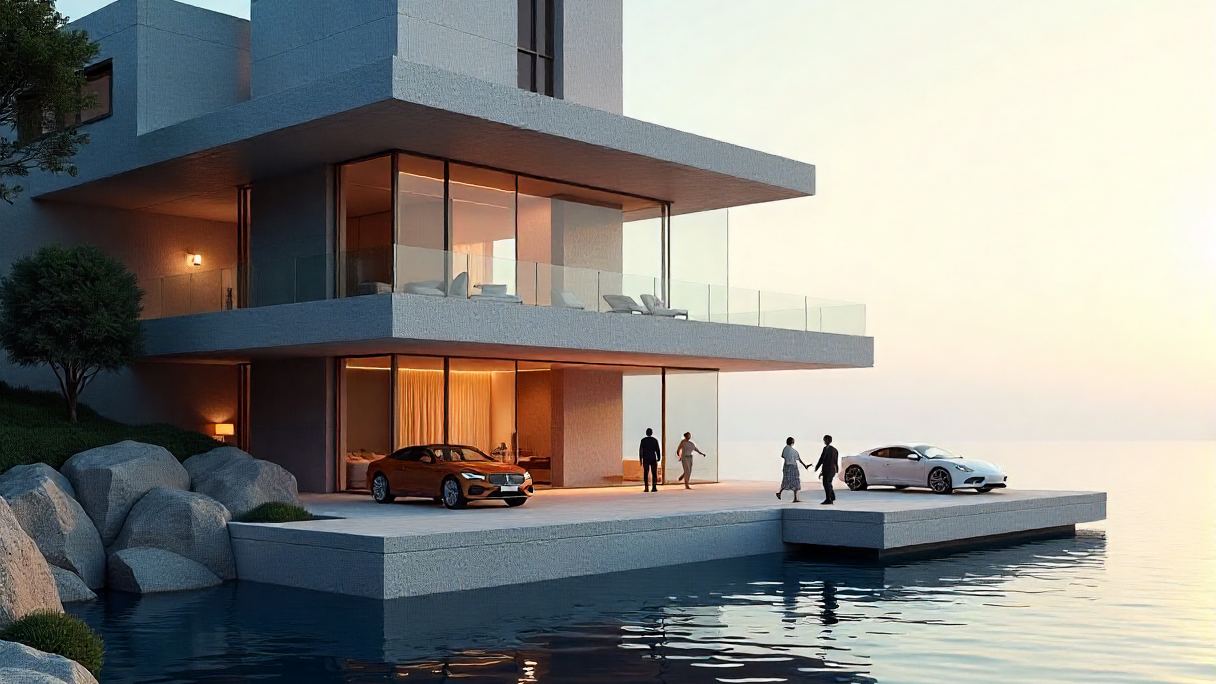
No sector illustrates the power of narrative capital more clearly than branded residences. These projects consistently command premiums of 20 to 35 percent over comparable properties, a differential that cannot be explained by materials or floor plans alone.
The true driver is story. A residence tied to a heritage house such as Ritz-Carlton or Bulgari is not just a home; it is an extension of a global narrative of service, artistry, and refinement. Buyers are not simply purchasing square footage, but entry into a lineage of meaning that will endure beyond the transaction.
Equally, partnerships with futurist brands, whether in fashion, automotive, or design, offer buyers something different but no less powerful: alignment with innovation. To own such a residence is to participate in a story of vision and forward momentum.
For developers and investors, the lesson is clear. In a crowded market where materials blur together, narrative creates distinction. A branded residence does not sell architecture alone. It sells the cultural and emotional distance between a commodity and an icon. That distance is where narrative capital lives.
Strategic Lessons for Luxury Brands
- Authenticity Above All Narrative capital cannot be fabricated. It must be anchored in truth, whether that truth lies in heritage or in genuine innovation. Clients at the high end are highly attuned to authenticity.
- Consistency Builds Compounding Value Like any investment, narrative capital grows through discipline. Each touchpoint must reinforce the same story, creating layers of meaning over time.
- Cultural Resonance Matters The strongest narratives are those that extend beyond the brand itself into culture at large, art, film, literature, and collective memory. Brands that achieve this become part of the cultural lexicon.
- Long Horizons Win Narrative capital appreciates across generations. The most successful strategies are those that think beyond seasonal collections or annual launches, and instead cultivate stories designed to endure.
The Coming Era of Story-Driven Luxury
As wealth globalizes and markets saturate, the significance of narrative capital will only intensify. The next decade of luxury will not be defined by materials alone. It will be shaped by the power of stories that confer identity and meaning.
Heritage brands will continue to deepen their myths, ensuring continuity across centuries. New entrants will lean on narratives of disruption, positioning themselves as the architects of tomorrow. In both cases, value will derive not from what is possessed, but from what is signified.
This is why luxury brands are increasingly extending into lifestyle realms: hotels, clubs, wellness, and most prominently, residences. A story cannot be told through objects alone. It requires spaces, rituals, and daily touchpoints that reinforce identity. Branded residences are perhaps the clearest manifestation of this shift. They allow buyers not only to purchase an item but to inhabit a narrative, to live inside the myth a brand has built over decades.
When a fashion house or hospitality icon translates its values into residential form, it creates an immersive ecosystem of meaning. A home is no longer just walls and windows. It becomes another chapter in the brand’s ongoing story, one that the resident helps animate. This deepening of touchpoints ensures that the narrative is not only seen but lived, not only admired but inhabited.
Consumers are no longer satisfied with ownership. They want their purchases to align with personal myths. They want their acquisitions to act as markers of who they are, or who they aspire to be. Narrative provides that alignment, and branded residences offer one of the most powerful stages on which it can play out.
Conclusion: The Rarest Resource in Luxury
Scarcity has always been the foundation of luxury. Once, scarcity meant materials, rare stones, rare woods, rare techniques. Today, scarcity means meaning.
The most enduring brands of the future will be those that recognize narrative as capital, and who treat storytelling not as embellishment but as the core of value creation.
Marble and gold will always retain their place. But it is meaning, embedded in narrative, that makes a brand truly future-proof. In a crowded market, the rarest resource in luxury is not material. It is story.
First published on LinkedIn.