Branded residences and luxury
The Collector’s Identity: Rarity as Social Currency
 Rosario Diaz Ausa
1 September 2025 · 6 min read
When Possession Becomes Belonging
From the first shells strung together as necklaces to the Renaissance cabinets of curiosities, humans have always collected. We do not simply acquire objects. We curate meaning.
To collect is to preserve, to signal, and to belong. In that act, possession becomes something larger than ownership. It becomes identity.
Today, in a world where nearly everything can be rented, borrowed, or streamed, true ownership has acquired new weight. A rare possession no longer functions only as a utility. It signals belonging to a cultural micro-society that understands its value.
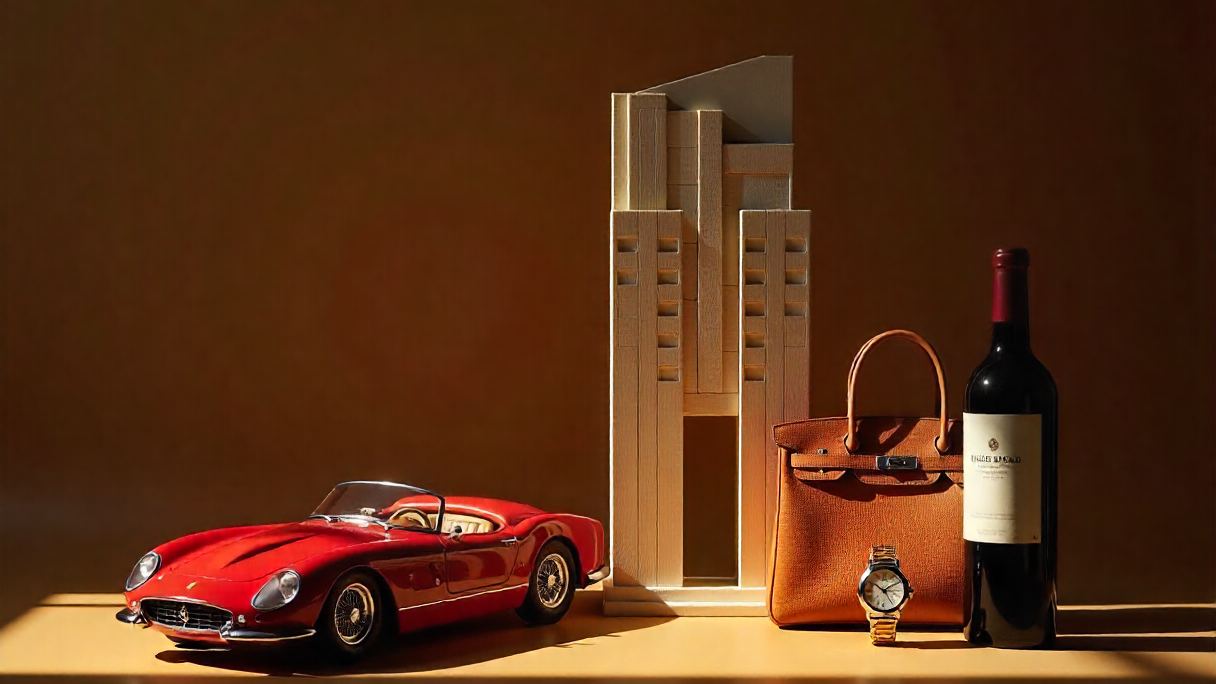
Think of the Ferrari parked in a discreet Monaco garage. For its owner, the car is not merely a machine. It is an induction into an unspoken brotherhood of collectors. Even the waiting list becomes part of the story. Each model is less a vehicle and more a chapter in a personal anthology of identity.
The same logic is now reshaping real estate and hospitality. Branded residences, private memberships, and editioned developments are not just properties or products. They are curated entries into a collector’s portfolio. Consumers do not just buy. They curate.
The Rise of Curated Identity
Collectors have always shaped culture. The Medicis used art to cement influence. Enlightenment aristocrats filled cabinets of curiosities to signal knowledge and prestige. Modern collectors build archives of photography, wine, or watches, each acquisition a declaration of belonging.
Luxury real estate and hospitality are increasingly playing in the same territory. A branded residence is not just an apartment. It is a statement in a larger lifestyle collection. A Four Seasons penthouse might sit alongside a vineyard in Tuscany, a Birkin bag, and a membership at Aman’s Janu club.
Each acquisition speaks outwardly to peers and inwardly to the self: this is who I am, and this is the society I belong to.
Scarcity as the New Abundance
Economists often note that scarcity drives value. Yet in luxury markets, scarcity is no longer just accidental. It is engineered and narrative-driven.
A Ritz-Carlton residence in Miami or Dubai is not competing with thousands of condominiums. It is framed as one of a finite number of keys into a world defined by service, discretion, and cultural weight. The project is not scarce by chance. It is scarce by design.
The scarcity is amplified by storytelling. A branded development is presented as an “editioned release,” closer in spirit to a rare Bordeaux vintage than to a standard piece of real estate. Owners are not simply buying bricks and mortar. They are buying a slice of a narrative of rarity.
Social Currency in the Age of Belonging
The collector’s identity depends on recognition. It is not enough to own. The ownership must be legible to a community that acknowledges its significance.
This is where branded residences gain an edge. Their prestige does not rest solely on square footage. It rests on the halo of the brand. A Waldorf Astoria or Armani nameplate is more than a logo. It is an unspoken handshake across continents, signaling shared codes and affiliations.
The recognition becomes social currency. Belonging to this micro-society validates the investment beyond financial return.
From Commodities to Chapters
What separates collectors from consumers is narrative. Consumers acquire commodities. Collectors curate chapters.
That is why a Ferrari resonates so strongly. Driving one in gridlocked Los Angeles is not efficient, but efficiency was never the point. The purchase inscribes the owner into a lineage of design and engineering. Each model is a chapter in the brand’s mythology and in the owner’s collection.
Branded residences are evolving into similar chapters. A penthouse in Dubai anchors a Middle East chapter, a pied-à-terre in Paris connects to cultural heritage, and a Miami condominium completes a transatlantic arc. The property is not just real estate. It is a storyline.
Investors as Curators: The Choreographed Dance
For investors, the collector’s identity reframes the logic of acquisition. It is no longer a purely financial equation. Returns matter, of course, branded residences regularly achieve 30 to 40 percent premiums and outperform in resale. But beyond yield, there is the question of narrative fit: how does this asset contribute to my collection, my identity, my belonging?
What makes this phenomenon fascinating is the choreography between brand and consumer. A brand establishes standards, codes, and scarcity, the “why” behind desirability. Yet it is the consumer who decides whether to enter that circle and validate those codes through participation.
This is why one person spends forty thousand dollars on a Birkin, while another spends the same amount on a Patek, or a down payment on a branded residence. The price point is similar, but the cultural belonging it buys into is different.
It becomes a chicken-or-egg dynamic. Did Hermès create the cultural capital, or did its buyers elevate it by choosing to ascribe meaning to it? The truth is that longevity emerges from the interplay of both. A brand can choreograph desirability, but only the sustained engagement of its collectors secures endurance across generations.
For real estate, this is a critical lens. The branded residence that thrives will not be the one that merely borrows a name, but the one that maintains a narrative durable enough to carry cultural capital long after the launch event. Longevity, in this sense, is not guaranteed by design alone. It is validated by the community that continues to curate it into their identities.
The Risk of Saturation
Yet there is a paradox. If everything becomes branded, then rarity erodes.
The surge of branded residence projects worldwide raises the risk of dilution. Not every logo on a building will hold the same cultural weight. Over-editioning can transform scarcity into ubiquity, undermining the very social currency these assets trade on.
The winners will be those who resist the temptation to scale endlessly. They will manage editioning, cadence, and narrative with discipline. They will position projects as cultural artifacts, not commodities in disguise.
Lessons From Other Collector Markets
Other industries illustrate both the opportunity and the danger.
In horology, Patek Philippe and Audemars Piguet cultivate rarity by controlling production and cultivating waiting lists. Ownership signals wealth, discernment, and patience.
In art, scarcity is inherent, but galleries and auction houses intensify it by curating provenance and narrative. A canvas is not just pigment. It is cultural capital.
For real estate, the lesson is clear. Developers entering the collector’s identity space must master scarcity, narrative, and belonging. Without these, branded projects risk sliding into logo-driven sameness.
Toward a New Paradigm of Ownership
The branded residence of tomorrow will not be sold as an address. It will be framed as an edition. Buyers will not only ask about amenities. They will ask: what does this acquisition say about my collection, my affiliations, and the society of owners I am joining?
For developers and investors, the opportunity is to shift from selling property to curating culture. Value will be multiplied not only in financial returns but in social and cultural resonance.
The collector’s identity is no longer confined to art, cars, or wine. It is shaping how people choose where to live, how they travel, and what they belong to.
From Ownership to Belonging
We live in an age of access, where anything can be streamed, borrowed, or replicated. True ownership has become rarer, and thus more meaningful.
Consumers do not just buy. They curate. And in curation, they weave narratives of identity and belonging. But those narratives endure only if the relationship between brand and collector remains alive. Longevity is not decreed from above. It is co-authored, a choreographed dance between the codes a brand sets and the cultural meaning its community chooses to uphold.
For branded residences, as for Birkins, Ferraris, or fine art, the lesson is the same: the future of value lies not in scarcity alone, but in the stories and societies that keep scarcity resonant across time.
First published on LinkedIn.